I confessed to my wife at 5:42 on a Thursday afternoon because the woman I had been seeing told me that if I did not leave my wife by six, I would never see her again.
I believed Elena was waiting for me in the old greenhouse across town.
I did not know that before six, someone would knock on my door carrying proof that Elena could not be waiting anywhere.
Why She Told Me to Leave My Wife
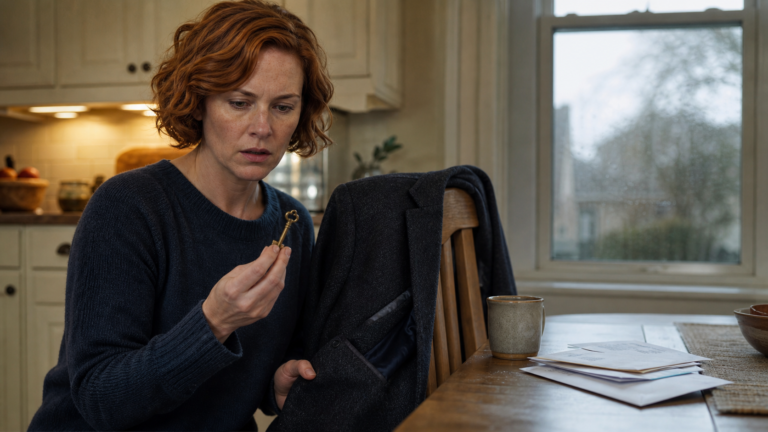
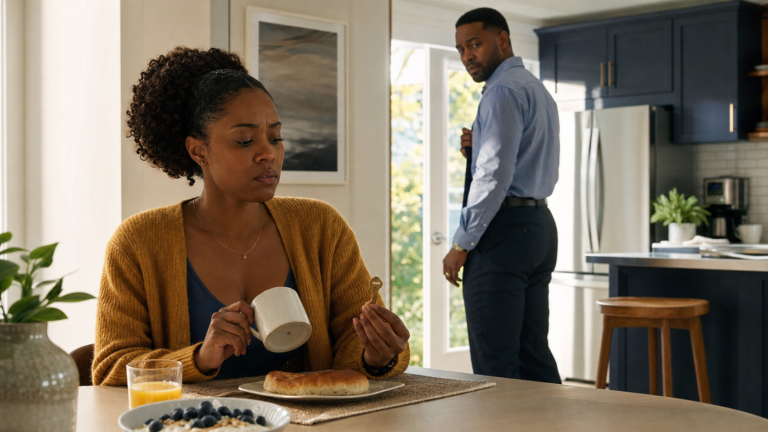
Mira was standing at the kitchen counter, cutting limes for dinner, when I said her name. She looked up immediately. After eleven years of marriage, she could hear guilt before I spoke it.
“What happened, Daniel?”
“I need to tell you something before you hear it from someone else.”
The knife stopped against the cutting board.
I had rehearsed a cleaner sentence in the car. There was no clean sentence.
“I’ve been seeing someone.”
Mira did not gasp or throw anything. She placed the knife down carefully and wiped her fingers on a towel.
“How long?”
“Six months.”
“Her name?”
“Elena Vale.”
For one second, Mira’s face changed—not into anger, but recognition. Then it disappeared so quickly I thought I had imagined it.
“Where did you meet her?” she asked.
“At Bellweather Gardens. The abandoned greenhouse near the river.”
“You met a woman in an abandoned greenhouse?”
“The first time was during a rainstorm. I went inside to get out of the weather. She was there sketching the broken windows.”
Mira folded the towel into a perfect square. “And then?”
“We talked. I went back the following Thursday. She was there again.”
“Every Thursday?”
I nodded.
“Did you sleep with her?”
That was the question I had feared, yet the truth was stranger than a lie. Elena and I had kissed. I had held her. I remembered the warmth of her breath and the pressure of her fingers around my wrist. But every time I tried to take her somewhere else, she refused.
“Not exactly,” I said.
Mira laughed once, without humor. “Only an unfaithful husband could invent those two words.”
I told her about the promises instead. I had promised Elena an apartment with yellow walls. I had promised Sunday mornings, a train trip north, and coffee on a balcony we did not own. That afternoon, she had sent her final message:
Come at six with your suitcase, or don’t come again.
“So why are you telling me?” Mira asked. “For forgiveness?”
“No. Because I was going to go.”
Her eyes filled, but she refused to let the tears fall.
“You still are.”
At 5:51, someone knocked on our door.
The Detectives at the Door
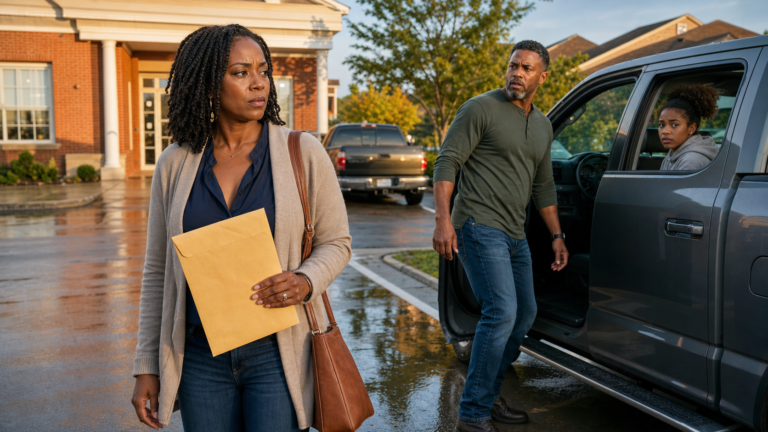
Two detectives stood on the porch. The older one held a clear evidence bag containing a water-damaged business card.
My business card.
“Mr. Daniel Alvarez?” she asked.
“Yes.”
“We’re investigating human remains recovered this morning at Bellweather Gardens.”
Mira stepped beside me. I could feel her anger temporarily making room for fear.
The detective raised the bag. “This was found inside the victim’s coat. Do you know a woman named Elena Vale?”
“Yes,” I said. “I was just going to meet her.”
The younger detective looked at his partner.
“Mr. Alvarez,” she said slowly, “the medical examiner believes Elena Vale died between fourteen and eighteen months ago.”
I laughed because the alternative was falling down.
“That’s impossible. I saw her last Thursday.”
“Her dental records were confirmed an hour ago.”
I took out my phone. Elena’s message was still on the screen.
Come at six.
The detective photographed it, then asked me to open the conversation. Six months of messages should have appeared.
There were only mine.
Where are you?
I miss you.
I meant what I promised.
Every response I remembered reading had vanished. The thread looked like a lonely man writing to silence.
“Check the phone company,” I said. “The messages came from her number.”
They had already checked. Elena’s number had been disconnected seventeen months earlier.
What the Camera Recorded
At the police station, I repeated the story until the words sounded ridiculous even to me. I described Elena’s green coat, the silver scar beneath her left ear, the way she tapped the glass three times before entering the greenhouse.
Those details matched the body.
That made me a suspect.
Then detectives showed us traffic-camera footage from the road outside Bellweather Gardens. Every Thursday, my car arrived at nearly the same time. Every Thursday, I entered alone.
I left two hours later, speaking to someone beside me who was not there.
Mira watched without blinking.
In one recording, I opened the passenger door for empty air. In another, I stood in the rain with my arms curved around a body the camera could not see.
“Turn it off,” Mira said.
Outside the interview room, she finally cried.
“I don’t understand,” I told her. “I wasn’t imagining her.”
“You were still leaving me for her,” Mira said. “Dead or alive, you made that choice.”
I had wanted the impossible discovery to erase my betrayal. It did not. If anything, it made the promises crueler. I had endangered our marriage for someone without a heartbeat, while the woman beside me had been painfully, inconveniently alive.
The detectives released me after midnight. Elena had been dead long before I first visited the greenhouse. Whatever had happened to her, I had not caused it.
That did not make me innocent of everything else.
The Photograph Mira Recognized
The next morning, Mira placed her laptop in front of me. She had searched Elena’s name through old news archives.
A missing-person article filled the screen.
Elena Vale, thirty-four, last seen leaving a restaurant near the river. The photograph showed the woman I knew, down to the scar beneath her ear.
Beside her stood a man with his arm around her waist.
Mira pointed at him.
“That’s why her name looked familiar.”
The man was Adrian Cole, the property developer who had purchased Bellweather Gardens. Two years earlier, Mira’s architecture firm had evaluated the greenhouse for restoration. Adrian canceled the project after engineers requested permission to inspect the foundation.
“He told us the ground was unstable,” she said. “Then he paid to have the building sealed.”
Police reopened their questions. By evening, they found old security footage showing Adrian’s truck entering the gardens on the night Elena disappeared. Under interrogation, he admitted they had argued. Elena planned to expose his use of unsafe materials on another development. He pushed her. She fell against an iron planter and died. He buried her beneath the greenhouse floor, then sealed the property.
But one question remained.
Why had Elena come to me?
The Promise Beneath the Promise
Mira found the answer in a photograph I had taken during my first meeting with Elena. I had believed I was photographing sunlight through broken glass. In the corner, Elena stood beside an old wooden bench.
On the bench was a red folder.
Detectives searched the greenhouse again. Beneath a loose board, they found Elena’s documents proving Adrian’s fraud. She had been trying to lead someone there for months—perhaps anyone willing to keep returning.
But she had not asked me to call police. She had asked me to love her.
That was the part that haunted Mira more than the ghost.
“She knew you were married,” she said.
“Yes.”
“And you promised to leave me.”
“Yes.”
“Maybe that was the price. Maybe she needed someone to make the same kind of promise Adrian made her before she could reveal where she was buried.”
According to Elena’s sister, Adrian had promised to leave his wife for Elena. He never did.
The ghost had not chosen me because I was special. She chose me because I was familiar.
I was another married man standing in a greenhouse, offering a woman a future built from borrowed time.
Six O’Clock
Mira moved into her sister’s apartment. She did not decide immediately whether our marriage was over, and I did not pressure her. For once, I stopped asking a woman to carry the consequences of my promises.
Three weeks later, police allowed us to return to Bellweather Gardens to collect my coat. The city planned to restore the greenhouse as a memorial and public garden.
At exactly six, sunlight turned the dusty windows gold.
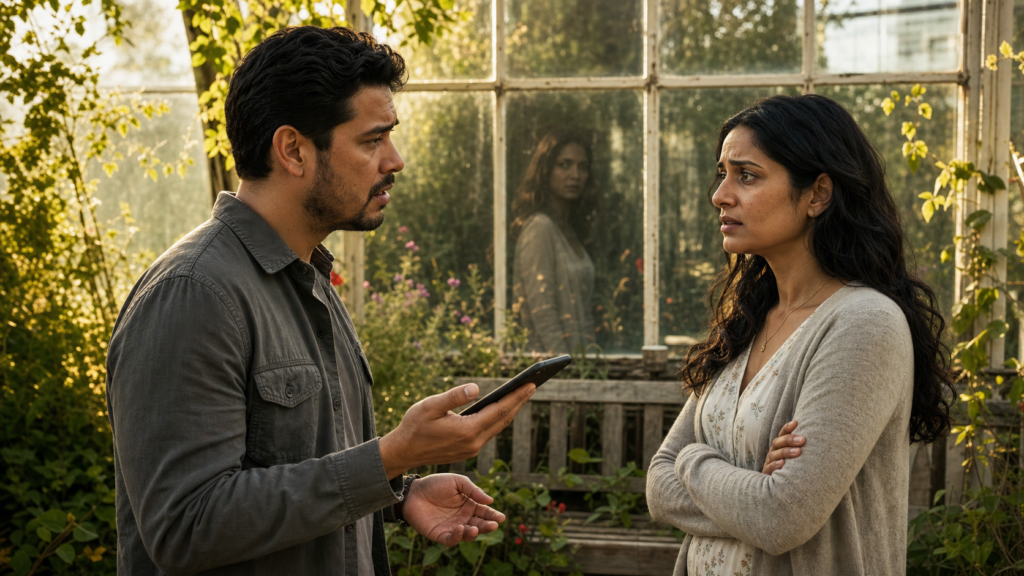
Elena appeared in the glass behind us.
Not as a floating shadow or a frightening corpse. She looked as she had every Thursday—green coat, dark hair, sad eyes.
This time, Mira saw her too.
Elena lifted one hand and touched the glass from the other side.
“You promised me,” she said.
I could barely speak. “I told them everything.”
She shook her head.
“Not me. Her.”
She looked at Mira.
I understood. Elena had never needed my promise of an apartment or a train ride. She needed my confession—the truth spoken to the living woman whose life I was destroying. Until I admitted what I had become, I was no different from the man who buried her secret.
“I told her,” I said.
Elena smiled. Then the sunlight shifted, and the reflection held only Mira and me.
After the Ghost
Mira and I did not reunite that evening. A supernatural explanation was not forgiveness. We spent ten months apart, attended counseling, and learned how much honesty costs when it arrives late.
Today, we are trying again. Not because Elena saved our marriage, but because Mira chose to see whether I could become a man whose promises did not require a ghost to enforce them.
Bellweather Gardens reopened last spring. Near the entrance, a plaque bears Elena’s name and the names of workers protected by the evidence she hid.
Sometimes I visit alone. I sit on the restored wooden bench and watch families move through the flowers.
I have never seen Elena again.
But last Thursday, as I was leaving, I noticed a man standing near the western glass wall. He wore a wedding ring. He was smiling at someone I could not see.
Then he raised his hand and tapped the glass three times.
Explore more relationship stories from Nocturnal Stories.
Why the Confession Comes First
Most betrayal stories delay the confession until the final twist. Here it arrives at the beginning so the real tension can come from consequence: what the narrator believes he has done, what his wife understands, and why the person at the door changes the meaning of both.
The repeated knocks turn guilt into something physical that cannot be dismissed as imagination. The supernatural element does not erase responsibility; it removes the excuses the narrator used to keep his choices separate from the people they harmed.
This is an original work of fiction. Names, characters, places, and events are invented.